|
The following Opioid Use Guidelines have been prepared by
the NHHPCO
Palliative Care Clinicians Special Interest Group as part
of their 'Best Practices Project'.
Please
Note: This information was produced as a guide ONLY. All doses and
recommendations should be checked and verified by an experienced
provider prior to use. The authors assume no responsibility for its
use.
Table 1:
Equianalgesic Dosing
|
Drug |
Initial (IR) Dose PO |
Peds dose:
(IR) initial / kg |
PO:IV |
PO MS : Drug PO |
Drug PO :
PO MS |
|
Morphine (MS) |
15 mg |
0.1 - 0.3 mg/kg |
3 : 1 |
1 : 1 |
1 : 1 |
|
Hydromorphone (HM) |
2 or 4mg |
0.06 mg/kg |
4 : 1 |
1 : 0.25 |
1 : 4 |
|
Oxycodone (Oxy) |
5 or 10mg |
0.2 mg/kg |
n/a |
1 : 0.66 |
1 : 1.5 |
|
Methadone (Me) |
2.5 or 5mg |
0.1 mg/kg |
2 : 1 |
See below |
See below |
|
Fentanyl Transderm (TDF) / SC / IV |
10 - 25 mcg/hr |
1 mcg/kg/hr |
n/a |
See below shortcut |
|
* Patients on codeine
and hydrocodone can be treated as opioid naïve.
|
Steps to Rotate or
Change Opioids
1. Calculate 24 hr dose of current drug.
2. Translate that to equianalgesic 24 hr dose of oral morphine.
3. Calculate 24 hr equianalgesic dose of new drug and
reduce dose to 50-75% of calculated
dose if pain is well controlled; use 100% otherwise.
4. Divide to attain appropriate interval and dose for new drug.
5. Always have breakthrough dosing available while making changes.
Breakthrough Dosing
(immediate release (IR) / short acting meds only)
50-150% of IV basal dose q15 minutes OR 10-20% of 24 hr
oral dose q1hr.
Changing Basal Rates
(due to inadequate baseline pain control)
Increase rate by 50-100% of IV basal rate q15 minutes.
Give a breakthrough dose each time basal rate is increased.
Ceiling Effect
= uncontrollable pain with appropriate
increases in dose OR side effects such as neuroexcitation,
myoclonus, or protracted central effects.
a) Rotate to another opioid as above.
b) Dose reduce opioid by 25-50% with addition of other treatment for
pain.
c) Treat side effect +/- dose reduce.
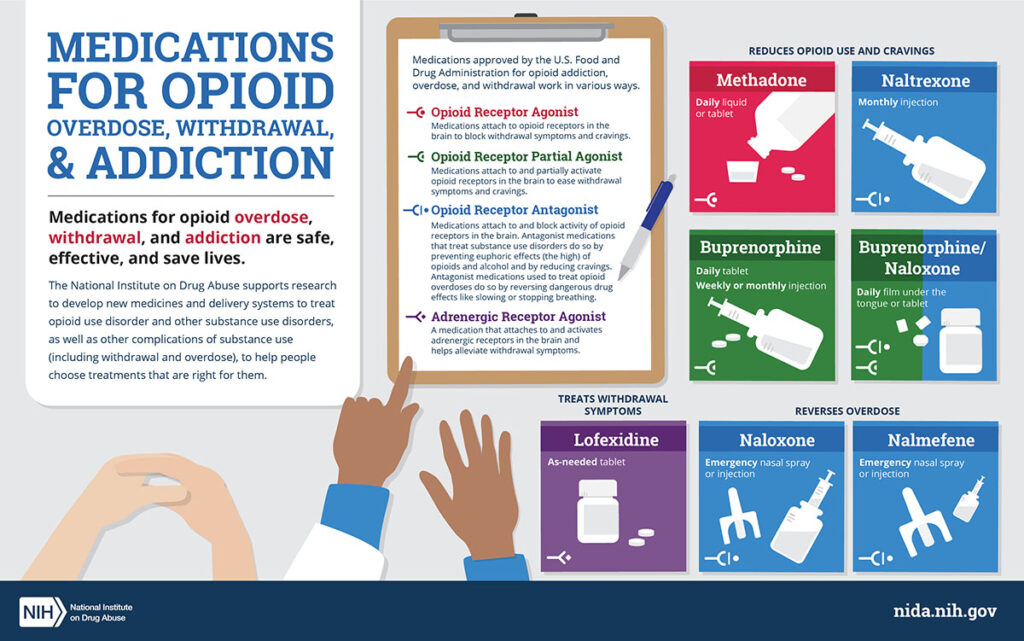
Partial Reversal with Naloxone:
ONLY
for overdose in rare cases:
à mix 0.4 mg amp with saline to make 10cc + administer 0.5 -1 ml
(0.02-0.04 mg) IV/SC q2-5 minutes until response; naloxone effect
shorter in duration than long acting opioids and close monitoring
+/- repeat doses sometimes necessary.
Table 2: MS : Me
|
One Way Rotation from
PO Morphine ( MS) to PO Methadone (Me) |

4 : 1 for up to 100mg MS |
15 : 1 for 501 - 1000 mg MS |
|
8 : 1 for 101 - 300 mg MS |
20 : 1 for > 1000 mg MS |
|
12 : 1 for 301 - 500 mg MS |
|
METHADONE
CAUTION: Use only with
experience or training in pain mgt.
- Dosing interval is titrated for
analgesic effect q4-12h; start with q8h.
- Delayed side effects @ Day 4 after initiation: highly lipid
soluble with potential delayed and prolonged side effects that
outlast analgesic efficacy.
- Prolonged QT at high dose>200 mg/day; interactions at CYP450 (esp
2D6, 3A4)
- Common drugs that increase methadone effect: SSRI’s (fluoxetine),
TCA’s (amitriptyline), macrolides, metronidazole, grapefruit juice.
- Decrease methadone effect: antiretrovirals, carbamazepine,
rifampin, phenytoin.
Rotation to Methadone
Day 1: Calculate dose (above). Give 33%
methadone dose + 66% of present drug.
Day 2: Give 66% methadone dose + 33% present drug.
Day 3: Give 100% methadone dose.
Rotation from Methadone
Caution: Ratios
above do not necessarily apply
–
consult an expert.
Rotating to and from Transdermal Fentanyl (TDF)
Shortcut: Transdermal
Fentanyl (mcg/hr) X 2 = approx 24 hr dose of MS PO(mg).
From TDF: Start new drug at 50% dose
for 6-24 hrs after removal of TDF.
To TDF: Continue old drug at 50% dose for 6-24 hrs after starting
TDF.
Bowel Routine
All patients on opioids should be on a
baseline bowel routine such as one or more of the following:
à Senna + docusate (Senokot S) 1-2
tabs twice daily.
à MOM 30-60 cc twice to three times
daily.
à Lactulose 30-60 cc twice to
three times daily.
à PEG solution: Miralax 1-4 T daily or
4-8 oz of GoLytely titrated to effect.
STEP UP: If symptoms
of constipation, lack of BM for specified period of time, or risk
factors present such as immobilization, hospitalization, significant
increase in opioids:
à Double dose of regimen above
OR add 2nd agent such as Lactulose or Miralax.
RECTAL IMPACTION
or significant rectal stool:
Empty rectum first with:
à Bisacodyl 10 mg pr bid for 1-3 days
or Fleet or other enemas until clear. Then proceed
with stepped up bowel regimen as above.
REGRESSION EQUATION
Repetitive research (see references
below) shows that equianalgesic ratios between methadone and
morphine are dose dependent and vary depending on dose. Studies
show relationships that vary considerably with the most conservative
ratio listed above in Table 2 (Ms : Me). Intuitively the
variation in ratio occurs gradually, not at sudden intervals.
A regression equation can be
derived that estimates the relationship based on gradual change in
ratio. Below is one regression equation derived from slightly more
aggressive ratios than in table 2.
Please use
with caution.

Special thanks to Louis
Gallerani for deriving the equation and plotting the graph.
REFERENCES
Main reference:
Quigley C. Opioid Switching to improve pain relief and drug
tolerability. Cochrane Review, 2004, Issue 3, pg1-34 (everyone
should have this comprehensive review and use it to access primary
literature)
Additional references:
Pereira J et al. Equianalgesic
Dose ratios for Opioids: a critical review and proposals for long
term dosing. J of Pain and Symp Mgt, 22(2), August 2001, pg
672-687
Benitez-Rosario MA et al. Opioid
switching from transdermal fentanyl to oral methadone in patients
with cancer pain. Cancer, 2004, Dec 15;101(12):2866-72
Kornick CA et al. A safe and
effective method for converting cancer patients from IV to TD
fentanyl. Cancer, 2001, Dec 15; 92(12):3056-61
Equianalgesic cards and tables:
ADJUVANT THERAPIES FOR PAIN
Bone Pain
NSAIDS, steroids, calcitonin, bisphosphonates
- ibuprofen 600 mg every 6 hours
(no NSAID has been proven any more effective than any other in large
studies though individual responses vary)
- if one NSAID does not work, try another in a different class
Neuropathic Pain
gabapentin, TCA’s, topical anesthetics
- gabapentin 100 mg po tid rapidly escalating to up to 4800 mg/d
- desipramine 10-25 mg po qhs up to 100 mg po qhs
- transdermal lidocaine 5% applied as needed
- compounded mixes (ie ketamine 5-10%; amitriptylline 2-5%;
ketoprofen 10-20%; baclofen 2-10%)
Muscle Spasm
- baclofen 5-20 mg 2-4 times per day up to 60 mg/day
- tizanidine 2-8 mg tid up to 36 mg/day
Tramadol
50-100 mg tid
Also
Cognitive Behavioral Therapy
Physical treatments (heat, cold, splinting)
Sensual Therapy (art, music, touch, aromatherapy)
Spiritual assessment and treatment
Pocket Cards
Available
This information is available on plastic laminated Pocket Cards
directly from the
New Hampshire
Hospice and Palliative Care Organization.
ORDERING
Information and ORDER FORM available HERE.
Please Note: The foregoing information was produced as a guide ONLY.
All doses and recommendations should be checked and verified by an
experienced provider prior to use. The authors assume no
responsibility for its use.
|